
Eighteen Years Alongside an Organic Berry Nursery
Keith Uridel grows certified organic blueberry, raspberry, blackberry, and strawberry plants in Indiana and ships them to home gardeners all over the country. I've been his web person since January 2008. I helped with his first hand-built site, coached him through the online store he built himself, and I've kept that store running, updated, and paying its way ever since.
This isn't a story about one big launch. It's about what it takes to keep a small seasonal business online for a long time, when most of the year's orders land in a few busy spring months.
At a glance
| Client | Backyard Berry Plants, Keith Uridel, owner |
| Location | Nashville, Indiana |
| Business | MOSA-certified organic berry plant nursery selling online nationwide |
| Working together since | January 2008 |
| Platform | WordPress and WooCommerce, UPS live rates, PayPal |
| Services | WordPress support and maintenance, e-commerce configuration, shipping and fee setup, email deliverability, security and bot control, performance tuning, marketing advice |
How it started
Keith found me in January 2008 through a referral from a mutual friend. He wanted a simple site, a domain, and hosting, and he wanted to understand how it all worked. We met at the farm a few times that winter. I walked him through CSS, image sizes, and an order page, set up his email on Google Apps (now Google Workspace), and helped him pick an inexpensive GoDaddy hosting plan.
Keith built and edited that first site himself in Microsoft Expression Web. It did its job for years. When Microsoft discontinued Expression Web in 2014, he asked about moving to something current. We met at the Bakehouse that December, and I helped him organize his plant descriptions in Google Docs so the content would be ready for a new platform.
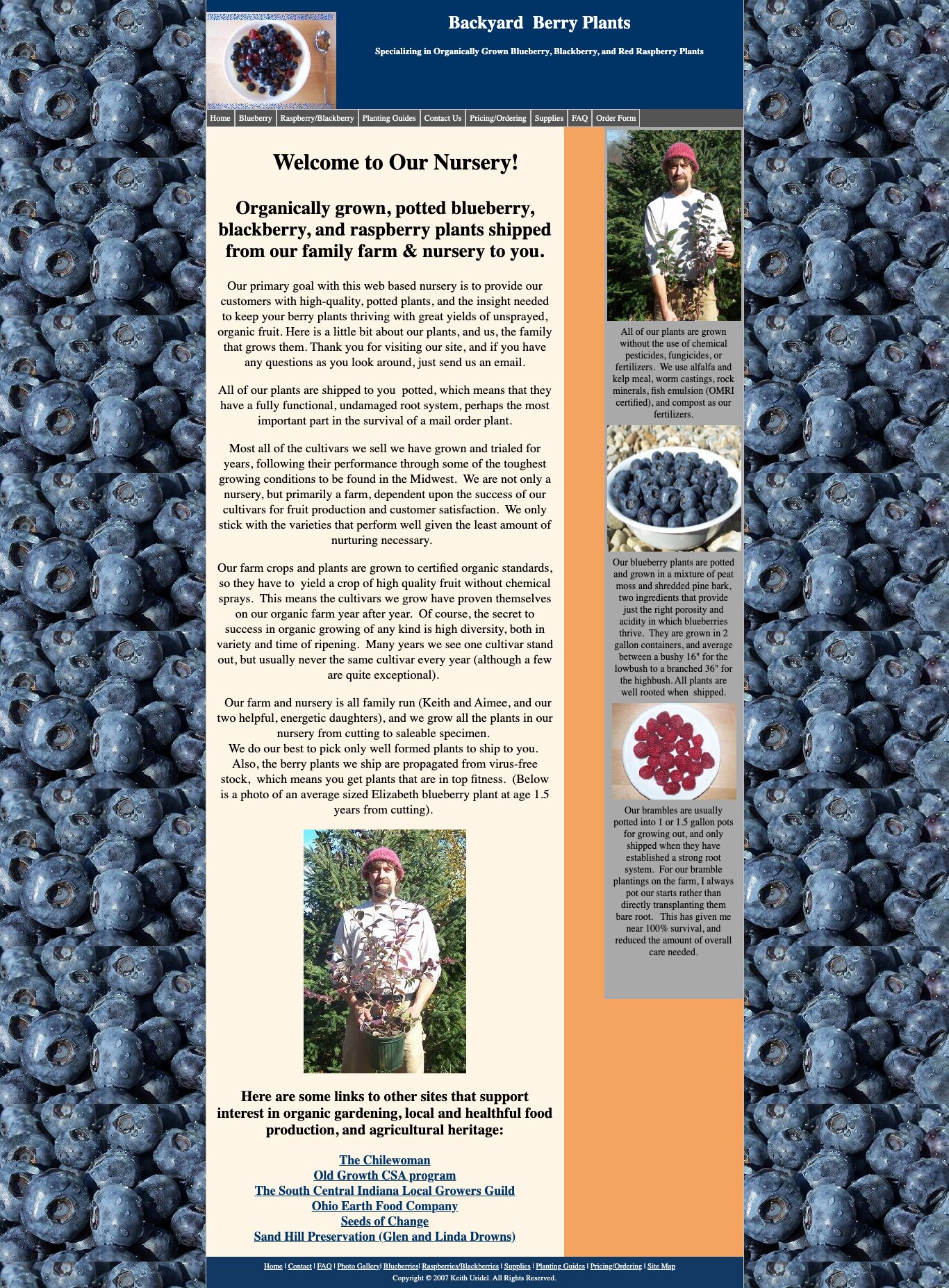
Then spring came, and it kept coming. A rebuild was not going to happen during planting season, and that was the right call.
Building the store together
In the fall of 2018 Keith was ready. He wanted a real shopping cart on the site, linked to PayPal. He set up WordPress and WooCommerce on a GoDaddy staging site and started moving his content over himself.
The sticking point was shipping. Live plants don't ship like books. Keith walked me through how his plants are packed and why some items always ship on their own. UPS bills by dimensional weight, so the cost depends on the box, not the plant. We worked through how to describe each product so the shipping calculator would choose the right boxes, and he settled on a PluginHive UPS plugin that pulls live rates.
We met at Needmore Coffee that December to work through the rest: choosing a theme he could live with, setting up a free shipping class for his core plants alongside the UPS-calculated items, and making the order confirmation emails feel like they came from a nursery. The new store went live soon after.
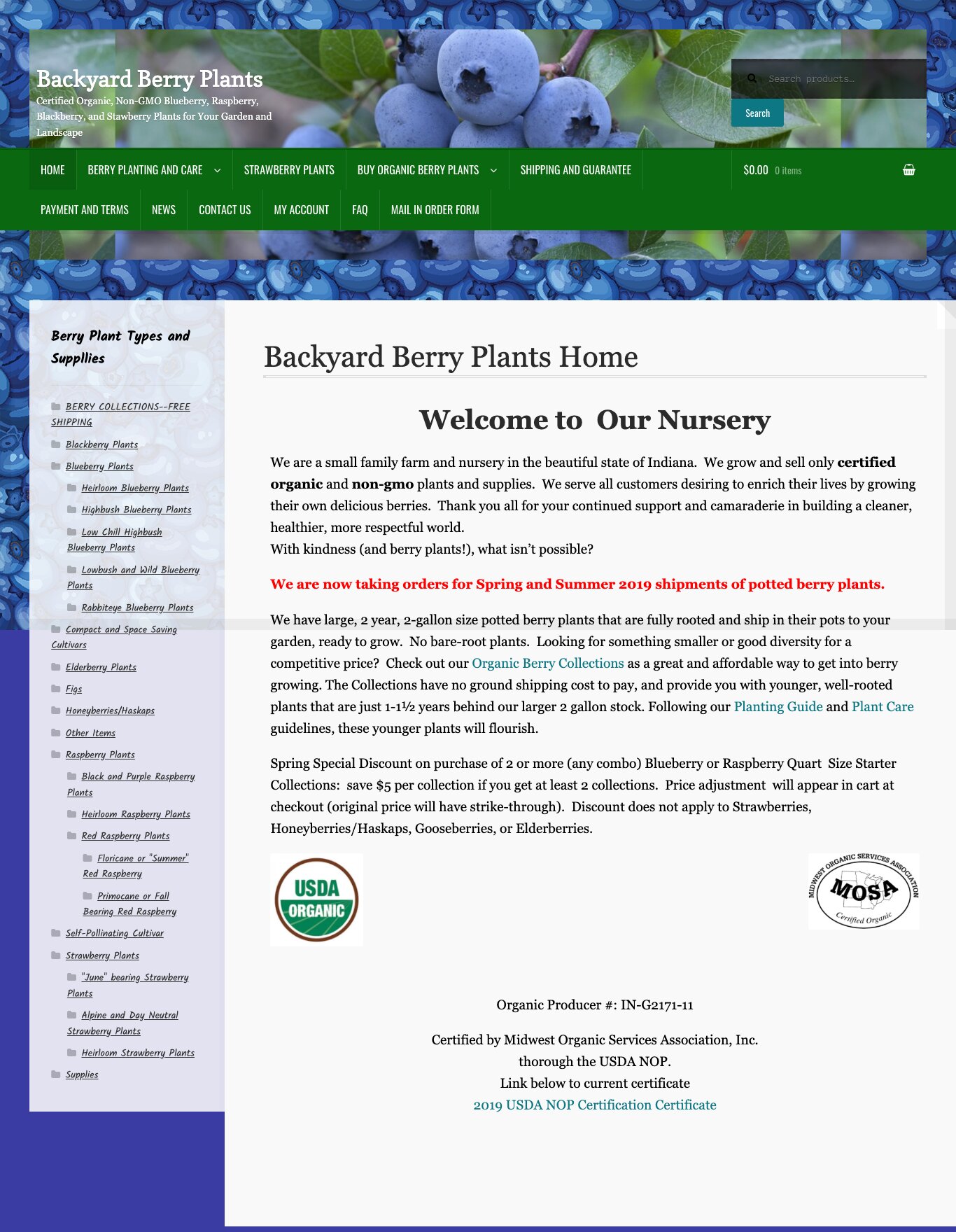
That same month Keith asked about ongoing help. Plugin updates on a busy store are easy to get wrong, and he didn't want to be sorting that out during planting season. That's been the arrangement ever since. Keith runs his own products and content, and I handle updates, troubleshooting, and the technical decisions.
Shipping live plants without losing money
Shipping is where a small nursery's margin lives or dies, and it has been the thread running through most of our work.
In mid-2024 Keith showed me the problem. A single plant could cost nearly as much to ship as the plant itself. Packing one plant takes the same box, tape, and labor as packing four. He didn't want to shut out the gardener with only a porch or a deck, but he couldn't keep subsidizing one-plant orders to the far side of the country.
We started with the simplest tool that would work: a small order fee, added with a free plugin, on carts below a set amount. Keith has adjusted the threshold and the amount over time, and the checkout page states the policy plainly.
We also looked at charging different fees by region. It's possible, but it needs the plugin's paid version and an annual subscription. For now the simpler setup does the job. I'd rather name that cost and let him decide than add a subscription he doesn't need.
The UPS connection itself has needed attention more than once. In 2025 UPS moved its rate service to a new sign-in method, and we reauthorized the plugin with his account. Another time, shipping options stopped appearing at checkout. Between my troubleshooting steps and the plugin's support team, a reset of the UPS connection brought them back. The fix is usually small. Knowing where to look is the hard part.
Some fixes were just words. In 2026 a quantity discount table was confusing some shoppers. Rather than buy a plugin upgrade that wouldn't have solved it, we reworded the discount label and added a clarifying line to each affected product.
Making sure customers hear back
When someone pays for plants in February that won't ship until April, the confirmation email matters. More than once, customers told Keith they hadn't heard anything after ordering.
In 2024, Gmail users weren't getting order confirmations. I updated the domain's DNS records at GoDaddy and we tested confirmations to Gmail and non-Gmail addresses until they arrived. In 2025 a few reports came back. This time I verified the SPF, DKIM, and DMARC records, turned back on an order email that had been switched off, and added an email log so we could see exactly what the site sends.
Keeping bots out without locking customers out
In late 2025 bots started creating fake customer accounts on the store. Deleting accounts in bulk on a store with years of real customers is risky, so I looked for a safer path first. We turned off public account registration on the My Account page, so customers now create an account only when they check out. For older accounts, we set a cleanup policy for long-inactive accounts, with Keith's approval. A website firewall in front of the site blocks much of the rest.
Speeding up the store
By October 2026 the store had slowed down, and parts of the dashboard weren't loading reliably. It had grown for nearly eight years, and it was carrying a lot of history.
Over two working sessions I made changes that didn't require new hosting or paid plugins:
- Turned on PHP's built-in code cache in cPanel.
- Converted the database tables to a more modern storage format, after a full backup, so order data no longer locks up under load.
- Moved background tasks to a real server schedule instead of running them on visitors' page loads.
- Set WooCommerce Analytics to update twice a day instead of after every order.
- Turned on page caching at the firewall, keeping cart, checkout, and account pages uncached.
- Archived and removed old backups and leftover files from the server, cleared an oversized email log, and removed plugins the site no longer needed.
The result: public pages that had been sluggish now load in a fraction of a second, the database is noticeably leaner, and WordPress Site Health shows no critical issues.
Each step went out with a short written plan, and anything that would change how checkout works goes to Keith for a decision first.
How we work together
The routine is simple. At the end of each month I update WordPress, WooCommerce, and every plugin, then send Keith a short note on what changed and anything that needs his decision. In between, he emails or texts when something looks off, and we hop on a quick screen share when it's easier to show than tell.
A few habits have held up over the years:
- Keith stays in control of his store. He edits his own products, prices, and pages. I handle the parts that can break things.
- Built-in settings before new plugins. When a WooCommerce setting or a reworded label solves the problem, that's the fix.
- Costs named up front. Paid plugins and bigger projects get a price and a yes from Keith before I start.
- Free marketing first. Our marketing conversations start with his Google Business Profile, customer reviews, and staying in touch with past customers.
- Plain explanations. Keith is busy, especially in spring. Every update comes with a sentence or two he can read on his phone between orders.
Still growing
Nearly two decades in, the site looks very different from the one we sketched out at his farm in 2008. The work hasn't changed much, though. Keep the store running, keep orders and emails flowing, protect the margins on hard-to-ship orders, and help Keith spend his time on plants instead of plugins.
If you run a small seasonal business and your online store has become more than you want to manage alone, let's talk.