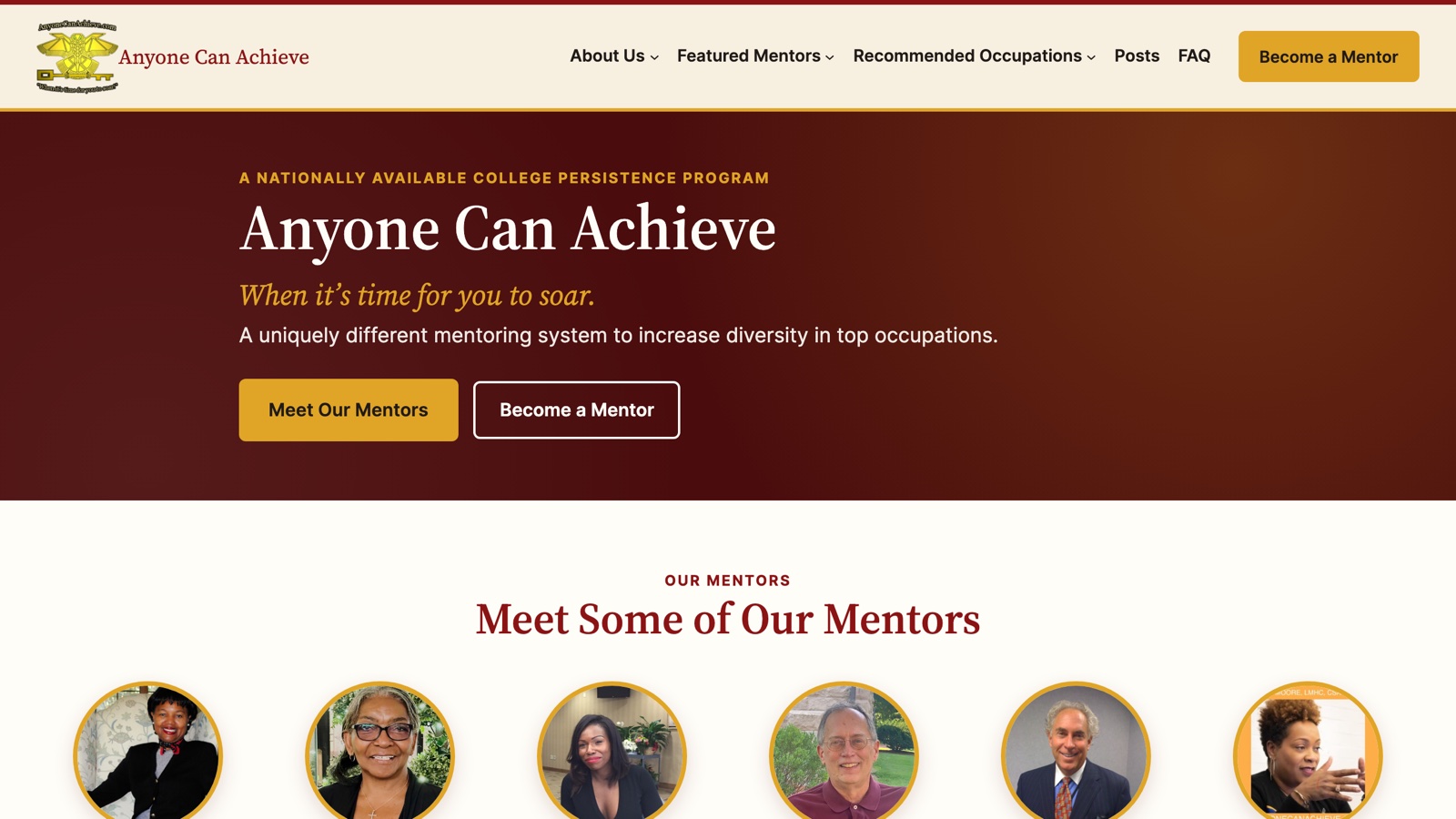
Anyone Can Achieve: 17 Years With Dr. Jack Thomas
Some clients hire you for a project. A few become part of your working life. Dr. Jack Thomas is one of those. We met at Starbucks around 2009, and I've been designing, hosting, and supporting AnyoneCanAchieve.com ever since. He still texts me when something on the site needs attention. Sometimes he texts just to set up a cappuccino.
Who he is and what the site is for
Dr. Thomas is a licensed clinical psychologist in Bloomington. He teaches psychology at Martin University and works as a medical advisor to state and federal judges. He has taught at Indiana University and Ball State too.
Anyone Can Achieve is his volunteer mentoring program. In his words, the mission is "to encourage college graduation and later success in the workplace." It's aimed at minority college students, and it's built on research he's done for years. One example is his list of 330 recommended occupations, careers that reward years of training and pay well over a lifetime.
Professionals in his network volunteer as mentors and share how they got where they are: psychologists, physicians, attorneys, professors, nurses, social workers. In 2010 his list had about a dozen names. Today the site has 38 mentor profiles. One of them is mine.
The site doesn't make money. It's a labor of love, and he's the one writing most of it.
Where we started
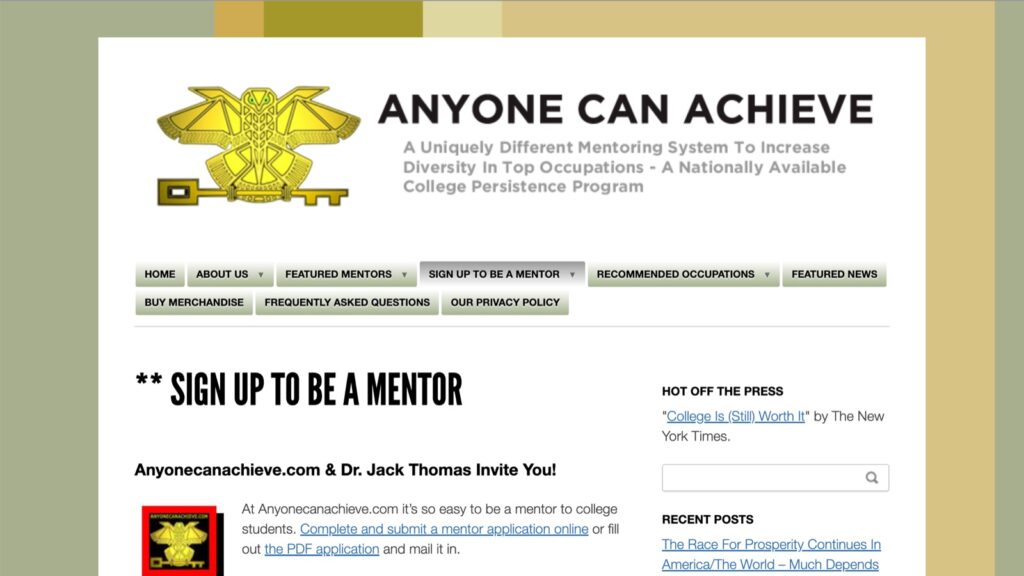
The early site was a classic blog layout: his gold emblem, two rows of gray menu buttons, and a long sidebar of recent posts, categories, and a tag cloud. The idea behind it was ambitious. Mentors would sign up, students would send in questions about a field, and a coordinator would route each question to the right mentor. The sign-up page promised mentors, "No phone calls. No get acquainted meetings." Just good, field-specific advice for students.
By 2013 it ran on WordPress, with a volunteer mentor application that sent new sign-ups straight to his inbox. A lot of our work happened by text. One evening in September 2013 I built a discussion forum for the site. It took me about an hour. The next morning he asked where the attestation was on the mentor application, and he sent me the wording. I added it within the hour. He wanted every mentor to swear that their "academic, vocational and professional history" was accurate. That's how seriously he takes the people he puts in front of students.
He also kept me honest. That same month he wrote, "The information about new mentors still isn't up after several weeks!" He was right. I got them posted, and I learned to keep things moving even when he wasn't asking.
Consultations over coffee
Most of our planning happened face to face. Starbucks, the IU Memorial Union, Soma, The Mill. Those consultations were where the real work started. We'd talk through what the site needed next, what was confusing him, and what he wanted students to see. Then we'd talk about everything else. After one of those lunches in 2014, he emailed, "That burger was really good! You did perform work my friend!"
Teaching him to run it himself
The biggest change came in 2015, when he asked me how to post an article himself. I sent him a short set of steps, and he took it from there. Most of what's on the site now, he wrote and published.
That changed my role. I went from posting his content to supporting him while he posts it. Over the years that meant a lot of small things: fixing a post that looked wrong, adding a new mentor to the homepage, adding featured images and tags, recovering his Google account. When we finally got his email back in 2021, he texted, "Thanks as always!" In 2020, when his classes moved online, I showed him how to use Google Meet so he could teach his graduate students from home. In 2025, when his university login stopped working right before a class, we sat down at The Mill and sorted it out.
None of that is glamorous. It's what keeps a one-person nonprofit site going.
Hosting he doesn't have to think about
AnyoneCanAchieve.com and his second site, TotalAchievementGroup.com, both live on my server. Once a year he gets one invoice that covers hosting, the SSL certificate, and a security firewall for both domains. In between, I keep WordPress and its plugins updated, watch the security alerts, and keep backups. When I upgraded servers in 2017 and again in 2023, I moved both sites over and handled the domain settings. He never had to touch any of it.
For a nonprofit run by one busy person, that matters. He gets to spend his time on mentors and students, not on servers.
Keeping it current
Every few years the site needed a bigger refresh.
In 2018 I cleaned up the spacing, fonts, and styles while adding a story about Deontae Craig, a student the program had followed from Culver Academy to playing defensive line at the University of Iowa. His reply was two words: "Excellent work!"
In 2023 he printed the homepage and told me it looked dark and the logo was hard to see. I moved the whole site to a newer WordPress theme that same day. He wrote back, "Awesome David!"
The 2026 refresh
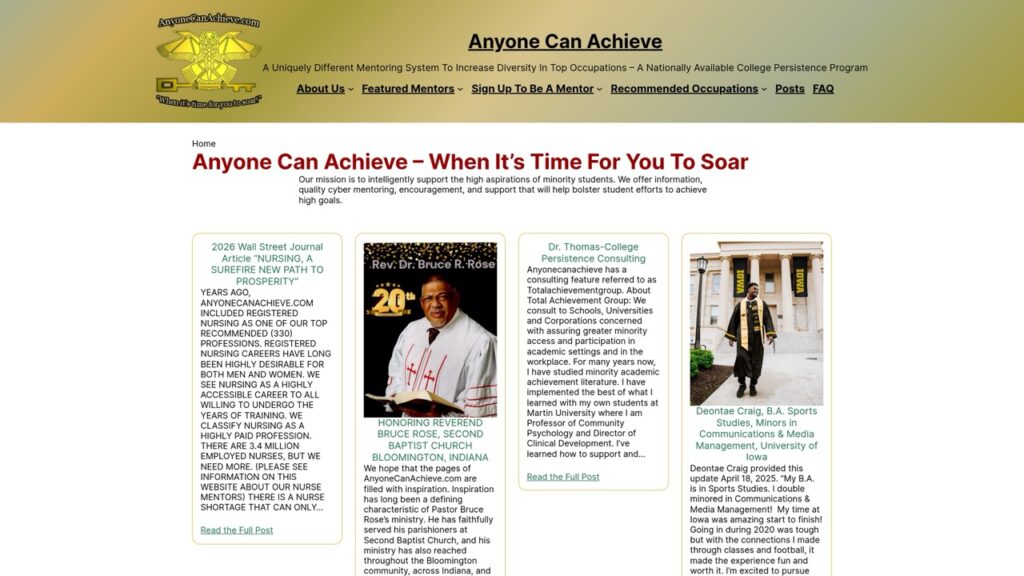
By this fall the site had outgrown itself. Years of publishing had left 32 overlapping categories, post titles typed in all capital letters, a discussion forum nobody had used since 2019 (the one I built in an hour back in 2013), and two posts that were just images of text. Search engines and screen readers couldn't read those. The menu didn't work well on phones.
On a Saturday night he texted me: "Several of the recent posts seem to be overlapping on the anyonecanachieve.com website. Can you help? 🥲"
The next morning I answered with a redesigned site. I used AI tools to help with the heavy lifting: auditing every post, mapping categories, and checking the result on desktop and mobile. That let me do in a morning what used to take weeks of billable time. The decisions and the review were mine.
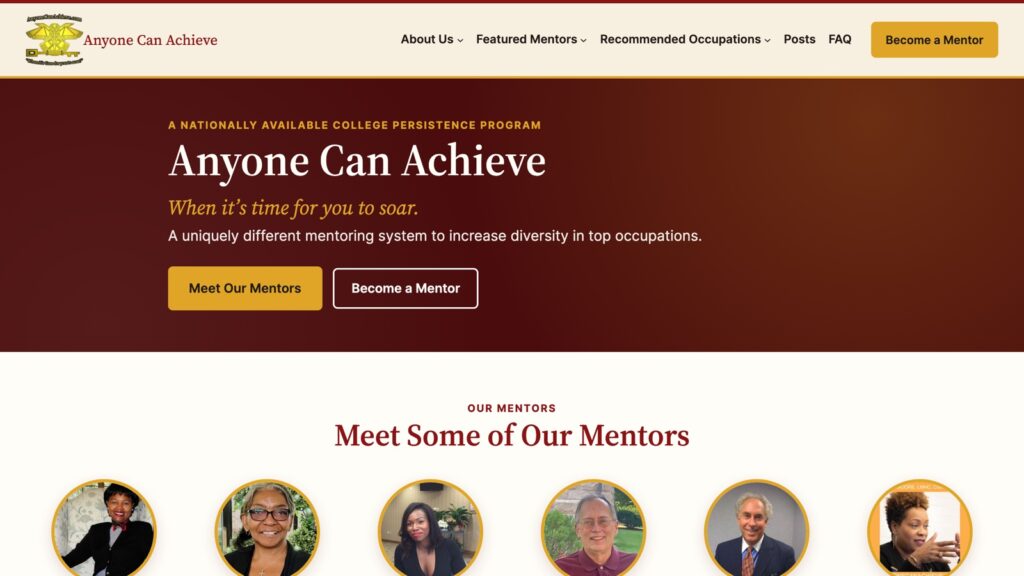
Here's what changed:
- A cleaner design that keeps his gold and maroon colors and his emblem, with a "Become a Mentor" button on every page and a menu that works on phones.
- A new homepage that says what Anyone Can Achieve is right away, shows the mentors, and points visitors to where they should go next.
- 32 categories cut to 9 clear ones, with tags on every post so readers can find related articles. Old links still work.
- The image-only posts typed up as real text.
- Two overlapping occupation pages merged into one.
- The unused forum and duplicate pages removed.
- Everything backed up first, so any change can be undone.
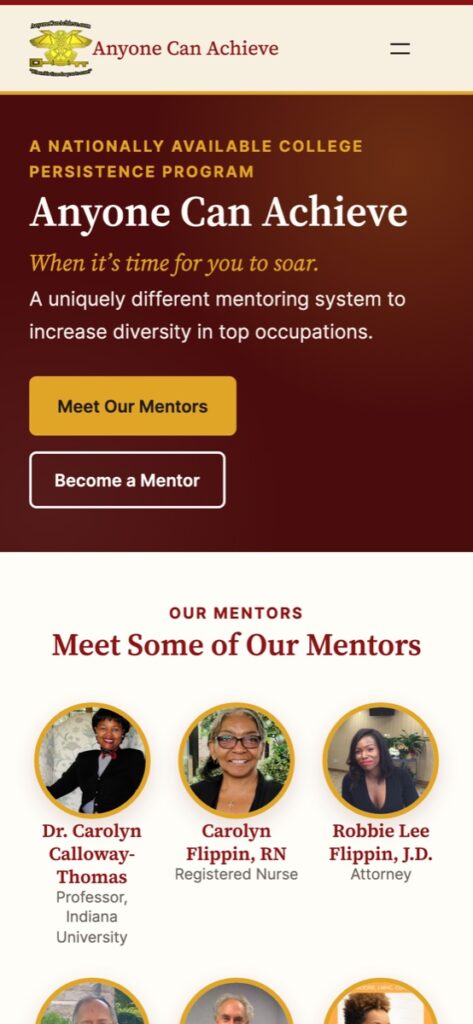
He looked it over, paid his hosting renewal, and texted back his changes. He wanted a shorter intro, the five newest posts, and a row of mentor photos. He picked the mentors himself. Twelve minutes later I texted, "ok, check it now."
What he said
That was fast! Wow! Excellent!
Dr. Jack Thomas, Anyone Can Achieve
He added two more mentors, I updated it again, and he wrote, "Perfect!" Then he asked the question every site owner should ask: would his new posts show up on the homepage on their own? They do. Then, "Thanks. I owe you a cappuccino sometime soon ☕️😋"
Later he called me, and we had a great conversation.
What I've learned from 17 years with one client
- Make the client independent, then stay close. Teaching him to publish didn't cost me work. It made the site his, and it made our time together about the things that mattered.
- Small help adds up. Most of what I've done for Dr. Thomas wasn't a project. It was a password, a photo, a menu fix. Those are what keep a site alive for 17 years.
- Show up in person when you can. A lot of our best planning happened over coffee.
- Answer fast when it matters. He texted on a Saturday night. He had a new site Sunday morning and his changes twelve minutes after he asked.
The program is called Anyone Can Achieve, and that's an idea he lives by. Working with him for this long has been a good reminder of it. You can see the site at AnyoneCanAchieve.com.
If you run a nonprofit or a small organization and want a website partner for the long haul, someone who handles the hosting and is happy to sit down over coffee, let's talk.